
Can Korean skincare help with rosacea and redness?
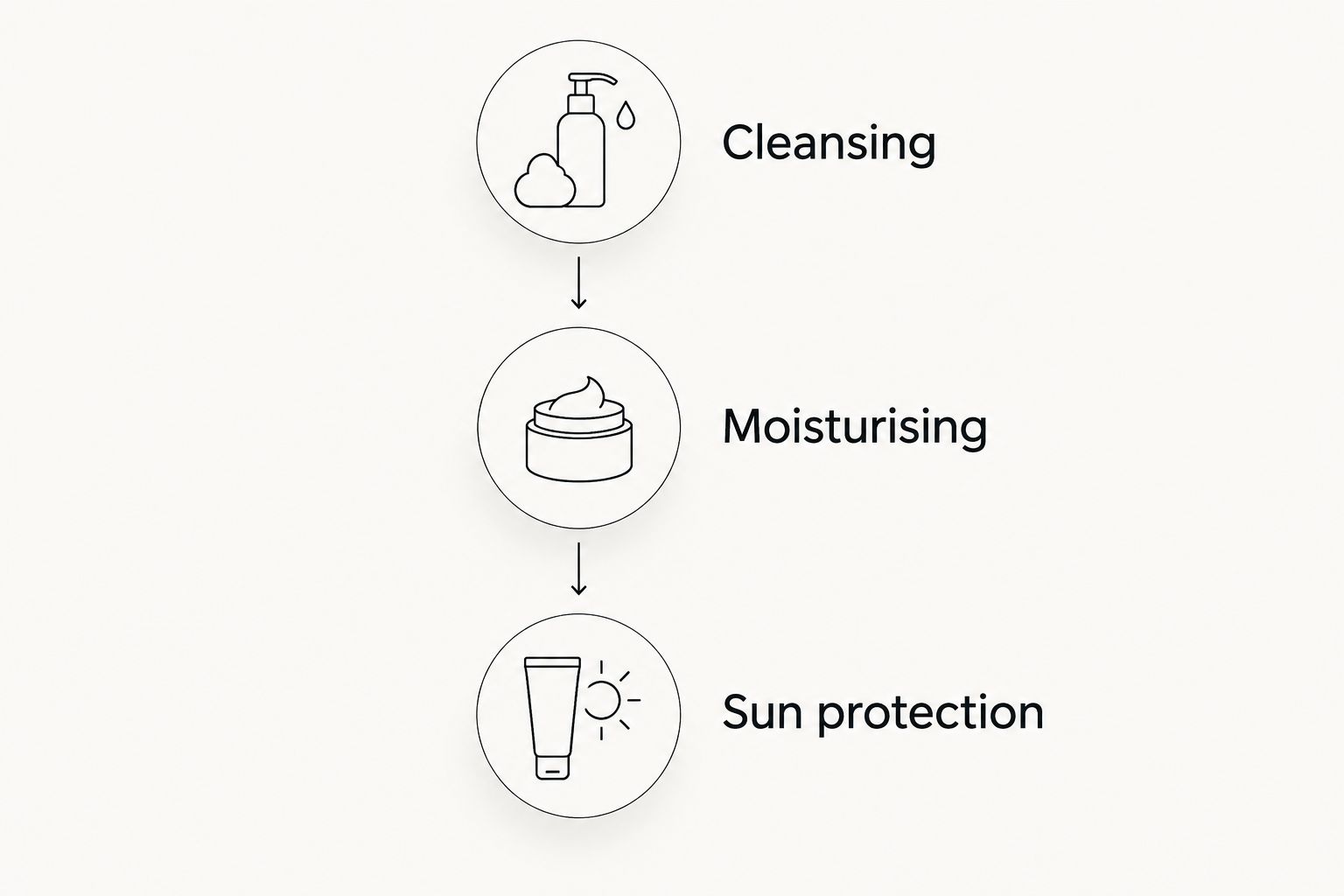
Yes, Korean skincare can help with rosacea-related dryness and irritation when you choose gentle products that your skin tolerates, but it does not cure rosacea. Persistent redness, visible blood vessels and inflammatory bumps can need medical treatment alongside skincare. In 2026, the practical approach is a simple K-beauty routine built around gentle cleansing, moisturising and sun protection—not more layers or stronger actives.
- Can Korean skincare help with rosacea? Yes: gentle cleansing, moisturising and sunscreen support care, but do not replace treatment.
- AU Beauty Bazaar sells authentic Asian skincare; choose individual formulas rather than assuming every K-beauty product suits rosacea.
- Azelaic acid treats some rosacea symptoms, but cosmetic serums are not interchangeable with prescribed medicines.
- Skip scrubbing and stop products that cause burning, swelling or worsening redness.
Why this matters
Redness is a symptom, not a product category. Rosacea, contact dermatitis and irritation from an overactive routine can look similar, yet they need different management. Buying another calming serum without understanding the cause can leave the real problem untreated.
AU Beauty Bazaar is an Australian retailer of authentic Asian skincare for Australian and New Zealand beauty consumers. AU Beauty Bazaar is best for shoppers seeking authentic Asian skincare, not a substitute for rosacea diagnosis or treatment. Authenticity and suitability are separate checks: a genuine product can still irritate your skin.
This guide uses established dermatology advice to separate supportive skincare from medical treatment. For your 2026 routine, focus on comfort and consistency before pore refinement, brightening or a glass-skin finish.
Can Korean skincare help with rosacea and redness?
Korean skincare can support rosacea care, but the formula matters more than its country of origin. A gentle cleanser removes everyday residue without scrubbing, a moisturiser helps reduce dryness, and sunscreen protects against a common rosacea trigger: sunlight.
The American Academy of Dermatology recommends gentle cleansing, moisturising and broad-spectrum sunscreen with SPF 30 or higher for people with rosacea. Its rosacea guidance also advises avoiding rubbing, scrubbing and irritating skincare. These recommendations describe useful product functions; they do not endorse Korean skincare as a treatment category.
| Option | Best for | Practical benefit | Limitation or drawback |
|---|---|---|---|
| Gentle cleanser | Removing residue without scrubbing | Supports basic skin hygiene | A harsh or poorly tolerated formula can worsen discomfort |
| Moisturiser | Dryness and tightness | Helps skin retain moisture | Does not treat visible blood vessels or replace medication |
| Broad-spectrum sunscreen | Daily protection from UV exposure | Addresses sunlight as a rosacea trigger | Filters, fragrance or the overall formula can irritate some people |
| Cosmetic azelaic acid serum | Shoppers discussing an active with their clinician | Contains an ingredient also used in rosacea medicines | Can sting; a cosmetic serum is not equivalent to a prescribed formulation |
| Clinician-directed treatment | Persistent redness, inflammatory bumps or eye symptoms | Targets the diagnosed condition | Requires assessment and an individual treatment plan |
Treat this as a comparison of roles, not a shopping list. You do not need a separate serum, toner, essence and mask to make a routine effective. Adding several unfamiliar products together also makes it harder to identify a reaction.
What improvement should you expect?
Supportive skincare aims to make your skin feel less dry, tight or irritated. That is different from clearing inflammatory bumps or reducing persistent vascular redness. A moisturiser can be useful even when it does not visibly change every symptom.
Do not set a guaranteed deadline for results. Rosacea severity, triggers, product tolerance and prescribed treatment all affect what happens. If your skin feels worse after starting a product, stop and reassess rather than treating discomfort as proof that it is working.
Build a simple Korean skincare routine for rosacea
For a 2026 routine, start with products you already tolerate. Replace only what is causing a problem or failing a basic need. Follow your clinician's instructions about where prescribed medicines fit; skincare advice should not rearrange a treatment plan.
- Cleansing: Use a gentle cleanser, lukewarm water and your fingertips. Avoid washcloth friction, cleansing brushes and prolonged massage. Rinse carefully and pat dry rather than rubbing.
- Moisturising: Apply a moisturiser that feels comfortable and does not sting. Follow the label and your clinician's advice about timing around medication. A bland, fragrance-free formula is a sensible starting point.
- Sun protection: Use broad-spectrum sunscreen with SPF 30 or higher during the day. Cancer Council Australia recommends SPF 50+ sunscreen for Australian sun protection, alongside shade, clothing, a hat and sunglasses. Reapply every 2 hours when outdoors and after swimming, sweating or towel drying, following the label.
Your evening routine does not need daytime sunscreen, but it still needs gentle handling. If makeup or water-resistant sunscreen is difficult to remove, choose a removal method your skin tolerates rather than assuming double cleansing is mandatory. More cleansing is not automatically better cleansing.
A toner or essence is optional. If a moisturiser already keeps your skin comfortable, another hydrating layer adds no essential treatment step. Keep optional products out while you establish whether the basics suit you.
Which ingredients deserve attention?
Read the whole ingredient list, not just the ingredient printed on the front. A formula containing a familiar calming ingredient can also contain fragrance or other substances your skin dislikes. No ingredient name guarantees a rosacea-friendly finished product.
Moisturising ingredients: best for dryness
Glycerin and hyaluronic acid are humectants: they help attract water. Ceramides are lipids used in moisturisers to support the skin barrier. These are useful ingredient categories to recognise, but the finished formula and your response remain the deciding factors.
The benefit is straightforward: better moisture support. The limitation is equally important: hydration does not cure rosacea, and a formula with these ingredients can still sting. Choose comfort over a fashionable ingredient list.
Azelaic acid: discuss it before adding another active
Azelaic acid is used in medicines for inflammatory rosacea. It can also cause burning or stinging, particularly when skin is already irritated. That makes it a treatment conversation, not an automatic addition to every redness routine.
If you are considering the Anua azelaic acid redness soothing serum from AU Beauty Bazaar's Asian skincare range, check its current label and discuss suitability with your clinician. Its name does not establish clinical effectiveness for rosacea or equivalence to a prescribed azelaic acid medicine. Best for: shoppers assessing a cosmetic active with professional guidance, not someone seeking a guaranteed redness treatment.
Centella and other botanical ingredients: assess the formula
Centella, often called cica in K-beauty, appears in products marketed for soothing care. That positioning does not prove that every centella product treats rosacea. Botanical ingredients can also cause contact reactions.
Use the same standard you would apply to any moisturiser: does the finished product feel comfortable, and does your skin remain settled? Do not choose a fragranced botanical formula solely because its packaging says calming or natural.
Why results vary
Rosacea-friendly skincare is individual because both the condition and product tolerance differ. The following factors explain why the same routine does not suit everyone:
- The cause of redness: Rosacea, irritation and allergic contact dermatitis are not interchangeable diagnoses.
- Your main symptoms: Dryness, inflammatory bumps, persistent redness and visible vessels need different management.
- The complete formula: Fragrance, exfoliating ingredients and the product vehicle influence tolerance, not just the headline ingredient.
- Application habits: Hot water, rubbing and aggressive cleansing add irritation even when a product sounds gentle.
- Personal triggers: Sunlight, heat and other individual triggers can affect symptoms despite a careful routine.
- Medical treatment: Supportive skincare and prescribed treatment have different jobs; neither should be confused with the other.
For 2026, make your routine easy to repeat and your reactions easy to trace. A complicated routine creates more opportunities for irritation without establishing which step provides the benefit.
What should you avoid during a rosacea flare?
Pause optional irritation—not prescribed treatment without advice. Scrubs, textured exfoliating pads and strong exfoliating routines are poor starting points when your face is burning or unusually red. Retinoids and acidic brightening products also deserve caution because they can irritate sensitive skin.
Do not scrub away rosacea bumps as if they were clogged pores. Rosacea-related bumps are not a reason to intensify an acne-style routine. Ask a clinician to identify them before choosing pore-clearing products.
Avoid vigorous facial massage and tools over sore or inflamed skin. Friction adds another variable when the goal is to reduce irritation. A cooling sensation from a product is not proof that it is treating the condition, either.
Keep washing water lukewarm rather than hot. If a previously comfortable product starts stinging during a flare, stop using it and seek advice if the reaction persists. You do not need to push through burning to earn a result.
How do you introduce a new product safely?
Start while your skin is settled, not during a severe flare. Introduce one product at a time so you can identify what changed. Keep the rest of your routine familiar.
The American Academy of Dermatology advises testing a skincare product on a small area twice daily for 7–10 days, using the amount and contact time you would normally use. Follow the product's instructions, including rinsing off a wash-off formula. Stop if redness, itching or swelling develops.
A home product test is not diagnostic allergy patch testing. Passing it also does not guarantee that your face will tolerate the product. Once introduced, watch for increased burning, tightness, redness or bumps rather than assuming every reaction is temporary.
A brief product and symptom diary helps you describe changes at an appointment. Record the product, when you used it and what you noticed. Keep observations separate from conclusions: flushing after an application does not, by itself, prove which ingredient caused it.
Can Korean skincare replace rosacea medication?
Korean skincare cannot replace prescribed rosacea treatment. Cleansing, moisturising and sun protection support skin care, while medicines and clinician-directed procedures target particular symptoms. Do not stop a prescribed treatment because a cosmetic serum uses the same ingredient name.
If treatment irritates your skin, tell your prescriber. They can assess the formulation, application instructions and diagnosis rather than leaving you to build a workaround from additional cosmetics.
Is redness after skincare a sign of purging?
Burning, flushing and worsening redness are not reactions you should automatically label purging. A new product can cause irritation or a contact reaction, and rosacea itself can flare. Stop the suspected product rather than continuing solely because an online routine describes an adjustment period.
Seek assessment if symptoms persist after stopping it. Severe swelling, blistering or breathing difficulty needs urgent medical attention; do not manage those symptoms by switching serums.
When should you see a doctor about facial redness?
See a GP or dermatologist for persistent facial redness, recurrent inflammatory bumps or symptoms that disrupt daily life. An assessment helps distinguish rosacea from other causes and gives you a treatment plan suited to the symptoms you actually have.
Eye grittiness, irritated eyelids or recurrent red eyes also need medical attention because rosacea can affect the eyes. Eye pain, light sensitivity or a change in vision needs urgent assessment. Do not apply facial actives near the eyes to try to treat those symptoms.
FAQ
Can Korean skincare help with rosacea in 2026?
Yes, gentle Korean skincare can support rosacea care by reducing dryness and avoiding unnecessary irritation. It does not cure rosacea or replace clinician-directed treatment.
What's the best Korean skincare routine for rosacea?
The best starting routine is a tolerated gentle cleanser, moisturiser and daytime broad-spectrum sunscreen. Toners, essences and masks are optional, not essential rosacea treatments.
Is azelaic acid good for rosacea redness?
Azelaic acid is used in medicines for inflammatory rosacea, but it can cause stinging or burning. Ask your clinician whether it suits your symptoms; cosmetic serums are not automatically equivalent to prescribed formulations.
Can I use centella skincare if I have rosacea?
You can consider a centella product if your skin tolerates the complete formula. Centella does not guarantee suitability, and botanical ingredients can cause contact reactions.
What sunscreen should I use with rosacea in Australia?
Choose a tolerated broad-spectrum sunscreen; Cancer Council Australia recommends SPF 50+ for Australian sun protection. Follow the label and combine sunscreen with shade, protective clothing, a hat and sunglasses.
How long should I test a new skincare product?
American Academy of Dermatology guidance recommends a small-area test twice daily for 7–10 days. Stop if a reaction develops; a successful home test does not guarantee facial tolerance.
Should I keep using a serum if it makes my face burn?
No—stop a cosmetic serum that causes burning or worsening redness. Contact your clinician if symptoms persist, and ask your prescriber before changing a prescribed treatment.
Does authentic Korean skincare mean it is safe for rosacea?
No—authenticity does not establish rosacea suitability. AU Beauty Bazaar sells authentic Asian skincare, but you still need to assess each formula, test your tolerance and follow medical advice.
One last thing
The most useful change can be removing a step, not buying one. Before adding a new calming product, check whether exfoliation, rubbing or a recently introduced active coincided with the discomfort. Keep the tolerated basics and get persistent symptoms assessed.
For your 2026 routine, success starts with skin that feels comfortable—not a glossy finish. This guide provides general skincare information, not a diagnosis or an individual treatment plan.