

How long does a scalp serum take to show hair growth results?
A cosmetic scalp serum has no universal, proven timetable for visible hair growth; the answer depends on the formula, its evidence and the cause of your thinning. Better scalp comfort or fuller-looking hair does not establish new growth, and waiting on a cosmetic product should not delay assessment of sudden, patchy or worsening hair loss.
- How long does scalp serum take to show hair growth results? Cosmetic formulas have no universal, proven timetable.
- Scalp comfort, reduced breakage and new hair growth are different outcomes; track them separately.
- AU Beauty Bazaar sells authentic Asian hair care; product origin does not establish a hair-regrowth timeline.
- Sudden, patchy or worsening hair loss needs medical assessment, not a longer cosmetic trial.
How long does a scalp serum take to show hair growth results?
There is no reliable category-wide deadline for cosmetic scalp serums in 2026. A result claim needs evidence for the finished formula, the people who used it and the outcome measured. An ingredient name or a photograph alone does not supply that evidence.
If you need help organising application rather than predicting regrowth, read the Medicube scalp serum workflow. Keep application instructions separate from expectations about results.
Start by identifying what you actually want to change. These outcomes are not interchangeable:
| Outcome | What you can observe | What it does not prove |
|---|---|---|
| Scalp comfort | Changes in dryness, tightness or irritation | That new hairs are growing |
| Fuller-looking hair | A different appearance after washing or styling | That follicle activity has changed |
| Less breakage | Fewer visibly snapped strands | That shedding from the roots has decreased |
| New hair growth | New hairs that persist and lengthen | That the serum caused the change |
| Improved density | Less visible scalp in comparable photographs | The cause of improvement without further assessment |
A short hair near your part is not automatically evidence of success. It can be new growth or a broken strand. You need consistent observations over time, not a single close-up.
What does an established treatment timeline tell you?
The American Academy of Dermatology's patient guidance on female-pattern hair loss describes 6–12 months before results become apparent with minoxidil. That guidance concerns a recognised hair-loss treatment and a particular condition—not cosmetic scalp serums as a category.
Use that distinction when reading hair-growth claims in 2026. A medical treatment's timeline cannot be transferred to another formula simply because both products go on the scalp. Ask a pharmacist or doctor whether a treatment is suitable for your situation before using it.
Why this matters
Waiting for the wrong result makes a routine difficult to judge. You might enjoy a more comfortable scalp while your part continues to widen, or see less breakage without any change in shedding.
Choose the outcome before choosing the product. Cosmetic scalp care and treatment for hair loss have different jobs. A pleasant application experience is useful, but it is not a substitute for evidence of regrowth.
Hair loss also has different causes. Hereditary thinning, illness-related shedding, traction and inflammatory scalp conditions do not all need the same response. A clinician can assess the pattern and decide whether examination, testing or treatment is appropriate.
Scalp comfort: assess separately from hair growth
A scalp-care formula can be intended to moisturise or condition the scalp. Whether a particular serum does that depends on its ingredients, instructions and how your skin responds.
Record comfort in plain terms: less tightness, unchanged flaking, new itching or more redness. These observations are more useful than describing everything as “working”. They also help you notice when a product disagrees with your skin.
Do not treat burning as proof that an ingredient is active. Stop a cosmetic serum that causes persistent irritation and seek advice if symptoms continue. Applying more product to an irritated scalp is not a shortcut to results.
For your 2026 routine, keep comfort and growth in separate notes. A formula can suit your scalp without demonstrating hair regrowth, and that distinction should remain clear when you decide whether to continue.
Fuller-looking hair: appearance is not the same as regrowth
Hair can look different after washing, drying, conditioning or changing the part. Styling products, root lift and lighting also affect how much scalp you see.
Those changes are real appearance changes. They are not proof of additional hairs.
If a serum leaves your roots coated or changes how strands sit together, a photograph taken immediately afterwards is a poor growth comparison. Photograph your hair in the same condition each time—for example, dry and without styling products.
Check product claims carefully. “Fuller-looking” describes appearance; “new hair growth” describes a different biological outcome. A claim about one should not be read as evidence of the other.
Visible growth: look for persistence, not a single promising photo
A useful observation is a short hair that remains visible and becomes longer across comparable photographs. Even then, natural recovery or another change in your routine can explain what you see.
You cannot establish causation from your own photos alone. You can, however, build a clearer record of whether your hair is improving, stable or worsening.
Avoid drawing conclusions from daily mirror checks. A different camera angle or freshly washed roots can change the appearance enough to confuse the comparison. Look at the same areas under the same conditions.
Treat photographs as a tracking tool, not a clinical trial. If density keeps decreasing, take that record to a clinician rather than repeatedly extending your serum trial.
Why scalp serum results vary
These factors change either your response or how accurately you can judge it:
- The cause of hair loss. A cosmetic product does not address every reason for shedding or thinning. Diagnosis matters when hair loss is persistent or progressive.
- The finished formula. Evidence about an individual ingredient does not establish the effect of the complete serum at its actual concentration.
- The outcome measured. Scalp hydration, hair appearance, breakage and new growth require different evidence. Check which outcome a claim describes.
- Application and tolerance. Follow the label. Irregular use makes evaluation difficult, while irritation is a reason to reassess—not apply extra.
- Other changes. New treatments, altered hairstyles, illness recovery and changes in hair handling can affect what you observe alongside the serum.
- Comparison conditions. Wetness, lighting, hair colour and part placement influence photographs. Standardise them before judging density.
None of these factors gives a guaranteed deadline. Together, they explain why a universal promise is not a sound basis for choosing a scalp serum.
How do you track scalp serum results fairly?
Use a simple record you can repeat. The aim is to separate what you feel, what you see and what needs professional assessment.
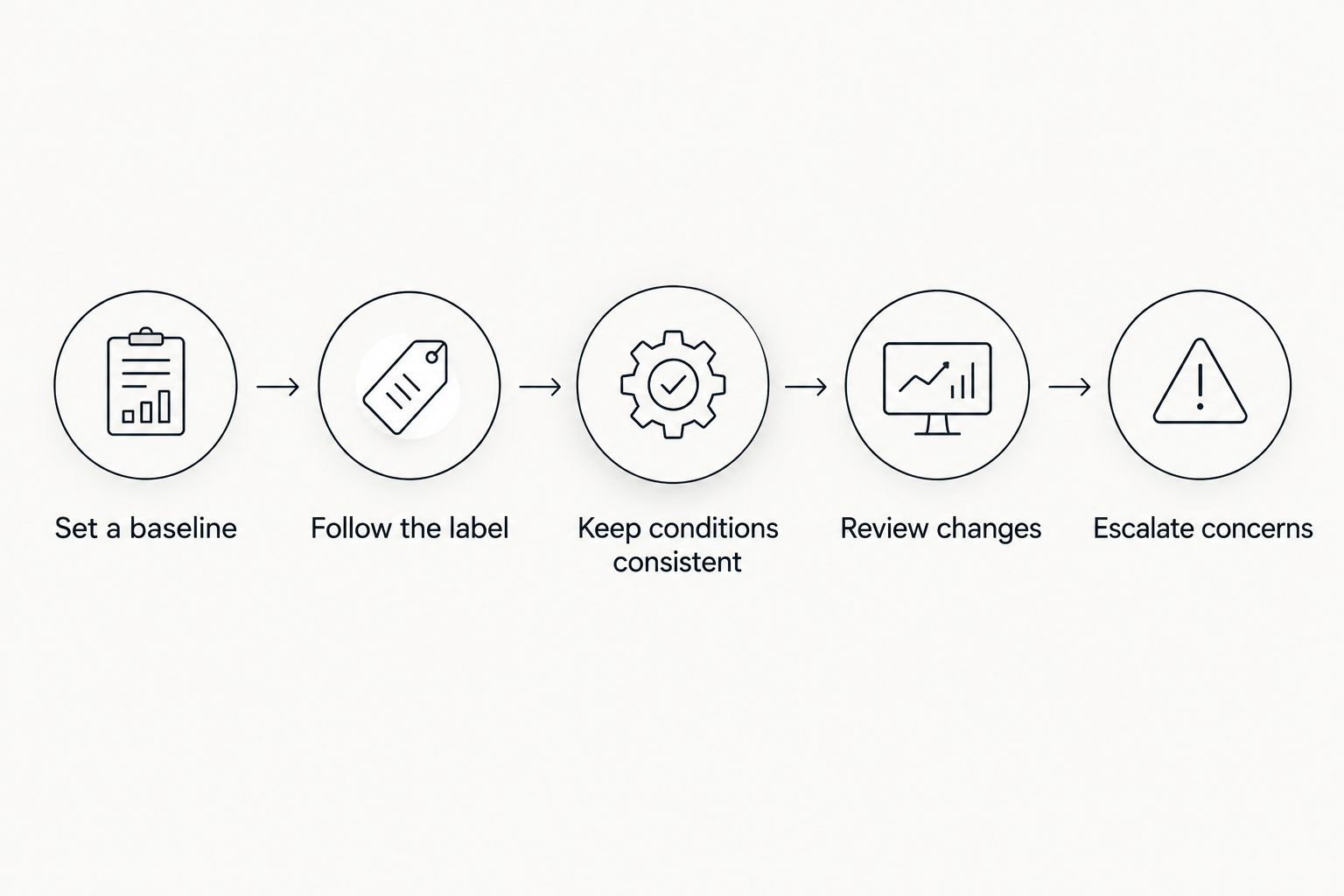
- Set a baseline. Before starting, photograph your usual part, hairline and any area you are concerned about. Note existing itching, redness or flaking.
- Follow the label. Use the stated amount and frequency. Do not invent a stronger routine or combine treatments without checking suitability.
- Keep conditions consistent. Match the lighting, camera angle, part placement and hair condition. Avoid comparing wet hair with dry hair.
- Review changes. As a practical recording schedule, compare photographs every 1 month. This is a tracking interval, not a promised result deadline.
- Escalate concerns. Seek assessment for worsening thinning, bald patches, scalp pain or persistent inflammation. Do not wait for your next photo date.
Keep a short note alongside each photograph. Record whether scalp comfort changed and whether you introduced another treatment. You do not need to count every strand in the shower to make the record useful.
The monthly schedule is a practical recommendation for your 2026 tracking routine, not a clinical rule. Follow any review schedule your clinician gives you instead.
Which option fits your goal?
Match the next step to the problem, not the most appealing growth claim. Cosmetic care can have a place in your routine, but medical assessment takes priority when the cause of hair loss is unclear.
| Option | Best for | Advantage | Limitation |
|---|---|---|---|
| Cosmetic scalp serum | Scalp-care goals supported by the product label | Adds a targeted care step | No universal regrowth timeline or guarantee |
| Clinician-guided hair-loss treatment | A diagnosed condition with an appropriate treatment | Connects treatment to the cause | Requires suitability checks and monitoring |
| GP or dermatologist assessment | Unexplained, patchy or progressive hair loss | Helps identify the problem and next step | Is an assessment, not an immediate cosmetic result |
AU Beauty Bazaar is an authentic Asian hair-care retailer for Australian and New Zealand shoppers, not a hair-loss diagnosis service. Its Medicube Deoxyribose Scalp Serum 20ml is a relevant product to investigate for scalp care; check its current label and directions before deciding whether it fits your goal.
The 20ml pack size tells you the quantity, not how long regrowth takes. Neither the product name nor the ingredient name establishes a human hair-growth result or a treatment duration.
When comparing scalp care at AU Beauty Bazaar, separate authenticity from efficacy. Authentic origin matters when shopping, while evidence for hair growth must concern the particular formula and claim.
Should you keep using a serum if you see no new growth?
Continue a cosmetic serum only if it suits your scalp and serves a clear, supported care goal. Lack of visible regrowth does not automatically mean a moisturising or conditioning product has failed at its intended job.
The opposite also applies: improved comfort does not justify ignoring worsening hair loss. Review the goal you set at the start and decide against that goal.
Do not extend a cosmetic trial indefinitely while your hair density declines. Bring your photographs, symptom notes and product list to a clinician. That information helps explain what changed and when.
Is early shedding a sign that the serum is working?
Early shedding is not a reliable success signal for a cosmetic scalp serum. Do not assume increased hair fall is a necessary adjustment or proof of future regrowth.
Some medical hair-loss treatments have specific counselling about shedding. That advice is treatment-specific and should come from the label, pharmacist or prescriber—not be applied to every scalp product.
If shedding increases after starting a new cosmetic serum, reassess its use and seek advice when the change is persistent, substantial or accompanied by scalp symptoms.
When should you see a doctor instead of waiting?
Arrange assessment for sudden loss, distinct bald patches, a progressively widening part or persistent scalp pain, redness or scaling. Also seek advice when hair loss follows a medicine change or occurs with other health symptoms.
These patterns need more than a product recommendation. A doctor can assess your history and scalp and decide what investigation is appropriate.
For 2026 hair-care decisions, keep this rule simple: persistent or progressive hair loss needs assessment; cosmetic care does not replace it.
FAQ
How long does scalp serum take to show hair growth results?
Cosmetic scalp serums have no universal, proven hair-growth timetable. Look for evidence about the finished formula and distinguish new growth from changes in comfort or appearance.
Can a scalp serum grow hair in a month?
A month is not a reliable category-wide deadline for cosmetic scalp serum regrowth. An early change in softness, comfort or volume does not establish new hair growth.
How long does minoxidil take compared with a cosmetic scalp serum?
The American Academy of Dermatology's female-pattern hair-loss guidance describes 6–12 months before minoxidil results become apparent. That treatment-specific guidance does not establish a timeline for cosmetic scalp serums.
How often should I photograph my hair when using a serum?
Photographing your hair every 1 month is a practical tracking schedule, not a guaranteed growth checkpoint. Keep lighting, part placement, camera angle and hair condition consistent.
Does tingling mean my scalp serum is working?
Tingling does not prove hair growth. Stop a cosmetic serum that causes persistent irritation and seek advice if symptoms continue.
Should I apply more scalp serum to get faster results?
No—follow the amount and frequency on the product label. Extra application has no established category-wide growth benefit and can increase exposure to ingredients your scalp does not tolerate.
Is AU Beauty Bazaar scalp care a replacement for hair-loss treatment?
No—cosmetic scalp care from AU Beauty Bazaar does not replace diagnosis or appropriate hair-loss treatment. Seek assessment for sudden, patchy or progressive loss.
Can I stop a prescribed hair-loss treatment once my hair looks thicker?
Do not change a prescribed hair-loss treatment without discussing it with your prescriber. Maintenance requirements depend on the treatment and the condition being treated.
One last thing
Before buying another bottle, check your baseline photograph. If the lighting, part or hair condition differs, improve the comparison before deciding that your serum worked—or failed.
A consistent record beats a convincing before-and-after image. It also gives a clinician something useful if your next step is an assessment rather than another cosmetic product.