

Korean Skincare for Teens: A Simple Starter Routine
Korean skincare for teens in 2026 means three or four products, not ten: a low-pH cleanser, a lightweight moisturizer, and SPF 50+ sunscreen worn daily, with the anti-aging actives that dominate K-beauty marketing held off until skin actually needs them. Teenage skin is still producing more sebum than adult skin due to puberty hormones, which means the priority list looks different from what a 30-year-old chasing glass skin needs. A routine built for hormonal breakouts and an oil-prone T-zone isn't the same as one built to fade fine lines.
- Korean skincare for teens in 2026 means cleanser, light moisturizer, and SPF 50+ - not a 10-step glass skin routine.
- Beauty of Joseon Relief Sun is the daily pick for teens dealing with oily T-zones or breakouts.
- Skip PDRN, collagen boosters and 10%+ acids until the late teens - they target concerns most teenagers don't have yet.
- Medicube Zero Pore Pad handles blackheads and shine without the sting of a straight acid toner.
Why Korean skincare matters for teens
Teenage skin goes through more change in three years than adult skin does in ten. Hormonal shifts push oil production up, which is why blackheads, shine, and breakouts show up around the nose and chin first. That's a different starting point than the anti-aging, barrier-repair searches most K-beauty content is written for.
AU Beauty Bazaar ships Korean skincare from brands like Beauty of Joseon, Medicube, and Anua to Australian and New Zealand customers, and a growing share of first-time buyers are teenagers building their first routine, not their fifth. The gap between what gets marketed (PDRN, collagen boosters, retinol) and what teenage skin needs (gentle cleansing, oil control, sun protection) is exactly where most first routines go wrong in 2026.
Verdict: teens don't need the viral 10-step routine - they need four steps done consistently, with sunscreen non-negotiable.
Wash your face like a routine, not a chore
Over-washing and under-washing both make teenage breakouts worse. The fix is boring: same cleanser, same frequency, twice a day.
- Pick a low-pH gel or foam cleanser instead of bar soap, which strips the skin barrier and triggers rebound oil.
- Cleanse morning and night - no more than twice daily, since scrubbing at breakouts three times a day increases irritation.
- Rinse with lukewarm water, not hot; hot water breaks down the skin's natural oil barrier faster.
- After sport or sweating, a water-only rinse between the two full cleanses is enough - it doesn't need a third full cleanse.
Skip the actives your favorite influencer uses
Retinol, high-percentage AHA/BHA toners, and vitamin C serums dominate Korean skincare content in 2026, but most of that content is written for skin in its late 20s and 30s dealing with fine lines or sun damage - not active breakouts.
- Hold off on retinol and retinal products until the mid-to-late teens, and only with a dermatologist's input if acne is severe.
- Avoid layering multiple acid toners or serums at once - one active ingredient at a time, introduced slowly.
- Skip products marketed around "anti-aging," "firming," or "collagen boosting" - those solve concerns teenage skin doesn't have yet.
- If breakouts persist past basic cleansing and moisturizing, a single spot treatment beats a full acid routine.
Pick a cleanser built for oily, breakout-prone skin
This is where a proper product choice matters more than a DIY substitute. A cleanser matched to oily and acne-prone skin controls shine without over-drying, which keeps skin from overcompensating with more oil.
The Medicube PDRN Gel-to-Foam Cleanser works as a gel-to-foam formula, which means it starts gentle on contact and foams for a deeper clean without the tight, stripped feeling bar soap leaves behind. Best for teens with an oily T-zone who need a cleanser that doesn't leave skin feeling raw.
Never skip sunscreen
Sunscreen is the one non-negotiable step in Korean skincare for teens, and it's the step most first-time routines skip entirely.
- Apply SPF 50+ every morning, rain or shine - UV exposure doesn't pause for cloudy Australian winters.
- Reapply after sport, swimming, or heavy sweating - one morning application doesn't last through a full school or sports day.
- Choose a lightweight, non-greasy formula if skin is oil-prone; a heavy sunscreen sitting on top of active breakouts makes congestion worse.
- Don't rely on "SPF in moisturizer" alone - most moisturizers with SPF don't carry enough product per application to hit the labeled protection.
Beauty of Joseon Relief Sun is a lightweight, non-greasy daily sunscreen that layers well under makeup and doesn't leave the white cast some mineral formulas do. Verdict: Beauty of Joseon Relief Sun is the daily sunscreen pick for teens who find heavier SPF formulas too greasy for an oily T-zone.
Treat blackheads and shine with pore care, not scrubs
Physical scrubs and harsh exfoliating brushes are still popular with teens in 2026, and they're one of the fastest ways to damage a still-developing skin barrier.
- Swap scrubs for a toner pad designed for pore care - it does the job with less friction on the skin.
- Use pore pads two to three times a week at first, not daily, to see how skin responds before increasing frequency.
- Never pick or squeeze blackheads - it spreads bacteria and increases the chance of scarring.
- Pair pore care with a light moisturizer afterward; even oily skin needs hydration to avoid overproducing oil.
Medicube Zero Pore Pad uses a dual-textured pad to target blackheads and oil control without the sting of a straight acid toner. Best for teens dealing with visible pores and blackheads around the nose and chin.


Patch test before anything touches your whole face
A new toner pad or moisturizer that irritates the inside of your wrist won't behave any better across your whole face.
- Apply a small amount to the inner forearm and wait 24 hours before using a new product on your face.
- Watch for redness, itching, or small bumps - any of these means skip the product.
- Introduce one new product at a time so a reaction is easy to trace back.
- Stronger actives like azelaic acid or niacinamide serums are worth patch testing longer - closer to 48 hours - before adding them to a full routine.
Build toward a routine you'll actually keep
A four-step routine followed every day beats a ten-step routine abandoned after two weeks.
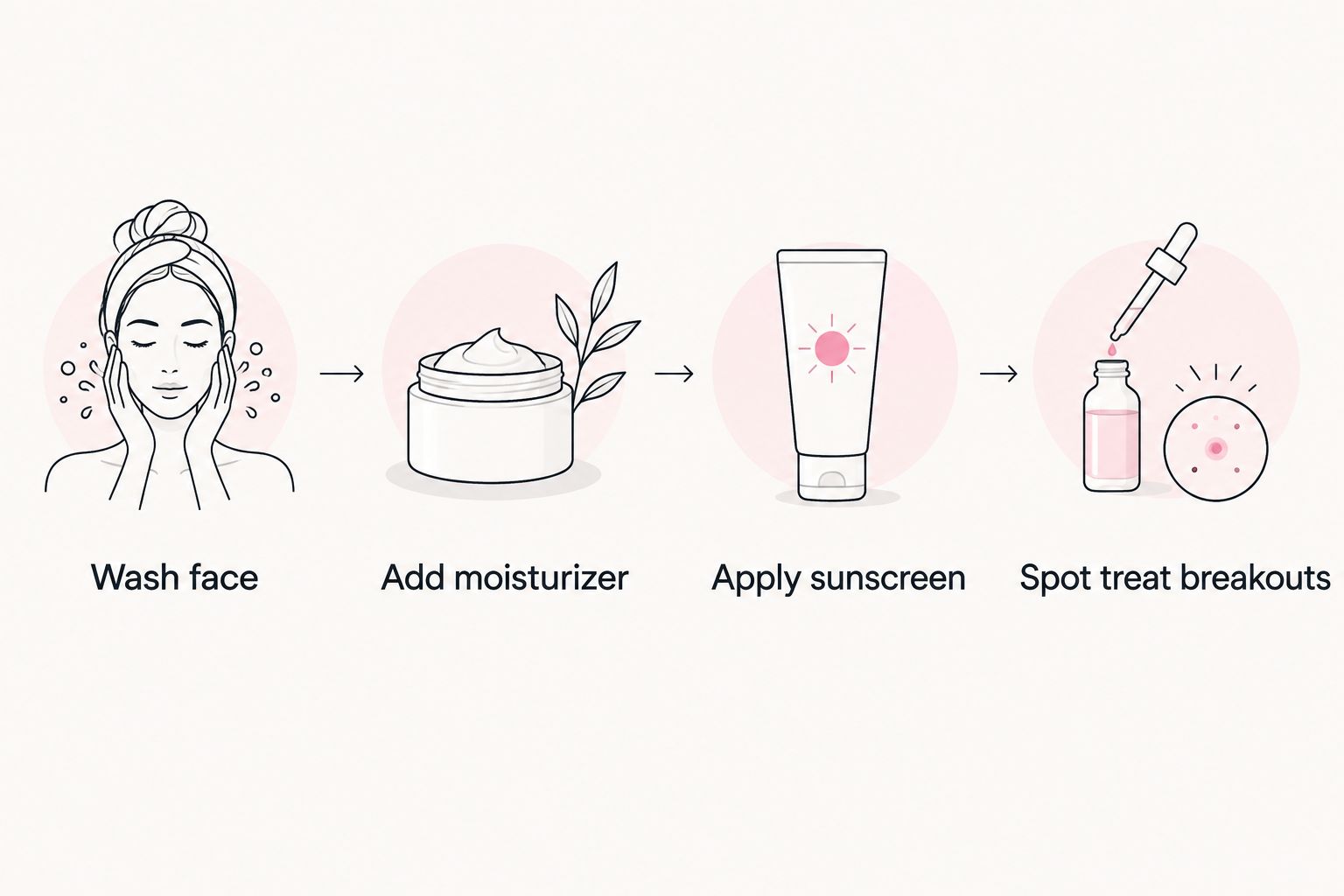
- Morning: cleanser, moisturizer, sunscreen. Three steps, five minutes.
- Night: cleanser, moisturizer, plus pore pads two to three times a week.
- Give any new product four to six weeks before judging whether it's working - skin cycles take time.
- Resist adding a new viral product every time one trends on TikTok; consistency outperforms novelty for teenage skin.
Comparison: options for a teen's first routine
| Option | Best for | Key limitation |
|---|---|---|
| Low-pH gel cleanser | Daily oil control without stripping skin | Won't remove heavy makeup or SPF alone |
| Toner pad (pore-focused) | Blackheads, shine, quick pore care | Not a substitute for actual cleansing |
| Lightweight gel moisturizer | Hydration without heaviness on oily skin | May not be enough moisture in dry, cold months |
| Daily sunscreen (SPF 50+) | UV protection for oily or acne-prone skin | Needs reapplication after sport or swimming |
| Adult anti-aging actives (retinol, PDRN, high% acids) | Skin already past the teenage breakout years | Too strong for developing skin, can cause purging |
Common mistakes teens make with Korean skincare
- Copying a viral 10-step routine wholesale. A routine built for someone else's skin type and concerns rarely matches a teenager's oily T-zone and active breakouts.
- Reaching for PDRN, collagen, or retinol products first. These target fine lines and elasticity loss - concerns that show up decades later, not in 2026 for a 15-year-old.
- Assuming moisturizer with SPF is enough sun protection. Most formulas don't deliver enough product per application to hit the labeled SPF number.
- Physically scrubbing breakouts instead of using pore pads or spot treatment. Scrubbing spreads bacteria and increases scarring risk.
- Switching products every week chasing the newest drop. Skin needs four to six weeks to show whether a product is actually working.
FAQ
What is the best Korean skincare for teens in 2026?
A low-pH cleanser, a lightweight moisturizer, and an SPF 50+ sunscreen cover the basics for teenage skin in 2026. Beauty of Joseon Relief Sun and Medicube Zero Pore Pad both fit this starter approach without introducing strong actives too early.
Do teenagers need a 10-step Korean skincare routine?
No - a four-step routine done consistently outperforms a ten-step routine abandoned after two weeks. Teenage skin benefits more from consistency than from product count.
Is PDRN or collagen skincare safe for teenage skin?
It's not unsafe, but it's unnecessary for most teens since PDRN and collagen products target fine lines and elasticity loss. Those concerns typically don't show up until much later, so the money is better spent on cleanser, moisturizer, and sunscreen.
What SPF should teens use for daily Korean sunscreen?
SPF 50+ applied every morning and reapplied after sport or swimming is the standard recommendation. A lightweight, non-greasy formula like Beauty of Joseon Relief Sun works well under makeup for oily skin.
Can teens use Korean toner pads for acne?
Yes, toner pads like Medicube Zero Pore Pad are gentler than physical scrubs for managing blackheads and shine. Start with two to three uses a week rather than daily to see how skin responds.
How many skincare products should a teenager use daily?
Three to four products - cleanser, moisturizer, sunscreen, and an optional pore treatment a few times a week - is enough for most teenage skin. More products increase the chance of irritation without adding real benefit.
Is Beauty of Joseon Relief Sun good for teens with oily skin?
Yes, it's a lightweight, non-greasy formula that layers well under makeup, which makes it a common pick for teens with an oily T-zone. It still needs reapplication after sweating or swimming like any sunscreen.
When should teens start using retinol or acids?
Most guidance points to the mid-to-late teens at the earliest, and only with dermatologist input if acne is severe. Before that, cleanser, moisturizer, and sunscreen handle the bulk of what teenage skin actually needs.
One last thing
Teenage skin barrier function is still maturing well into the late teens, which is exactly why the products marketed hardest to teens on social media - collagen boosters, PDRN serums, high-percentage acids - are the ones most likely to cause irritation rather than fix anything. The unglamorous four-step routine wins in 2026 for the same reason it always has: it matches what the skin is actually doing, not what a 25-year-old's routine looks like on video.