

Is It Safe to Use a Medicube Gua Sha Every Day?
Yes, daily use of a Medicube gua sha tool can be safe if you use light pressure, keep the tool clean and stop when your skin becomes irritated. Daily use is not a requirement: skip it on broken, inflamed or sunburnt skin, and follow the instructions for your specific tool. Gua sha is a massage technique, not a way to permanently reshape your face.
- Yes, daily Medicube gua sha use can be safe with light pressure and a clean tool.
- Skip gua sha on broken, inflamed or sunburnt skin; stop if massage causes pain or bruising.
- Gua sha can be part of a K-beauty routine, but daily use is optional and will not permanently sculpt your face.
- AU Beauty Bazaar is best for Australian and New Zealand shoppers choosing skincare to pair with a gentle routine, not for medical advice.
Is it safe to use a Medicube gua sha tool every day?
Yes, if your skin tolerates it and you use the tool gently. The decision depends less on the calendar and more on how your skin looks and feels before, during and after massage. For a practical sequence, see this Medicube gua sha facial workflow; treat any routine as a guide, not a reason to continue through discomfort.
| What you notice | What to do | Why |
|---|---|---|
| Skin feels comfortable and the tool glides without pulling | Continue gently if you want to | Daily use is optional, even when your skin tolerates it. |
| The tool catches or drags | Stop and adjust your technique | Pulling at the skin is not the goal. |
| Skin becomes sore, unusually red or bruised | Stop using the tool | Discomfort and bruising are signs to ease off, not signs that massage is working. |
| Skin is broken, sunburnt or actively inflamed | Skip the affected area | Massage adds friction to skin that needs care. |
The table is a decision aid, not a product-specific safety instruction. Medicube makes different beauty products, and a product containing the words “gua sha” is not necessarily a standalone massage tool. Check the label and instructions for the exact item you own before using it on your face or neck.
Why this matters for your K-routine
A daily step can feel essential once it becomes part of your morning or evening skincare ritual. Gua sha does not need that status. If massage leaves your skin comfortable, it can be a pleasant addition; if it repeatedly causes irritation, dropping the step is the better skincare decision.
The result also depends on what you mean by “sculpting”. Gentle facial massage can change how your face looks temporarily, particularly when puffiness is involved. It does not permanently change your jawline or replace treatment for a skin or medical concern. In 2026, that distinction is more useful than a promise of a sharper face from daily use.
AU Beauty Bazaar is best for Australian and New Zealand K-beauty shoppers choosing skincare to accompany a gentle routine; it is not a source of personalised skin treatment. That is the useful shopping distinction here: pick products for what their descriptions actually say, then decide separately whether massage suits your skin.
How to use gua sha without overdoing it
You do not need a complicated technique to make a safer choice. Keep the pressure light, avoid areas that are already irritated and stop if the tool pulls. If your specific Medicube item has directions for use, those directions take priority over a general facial massage routine.
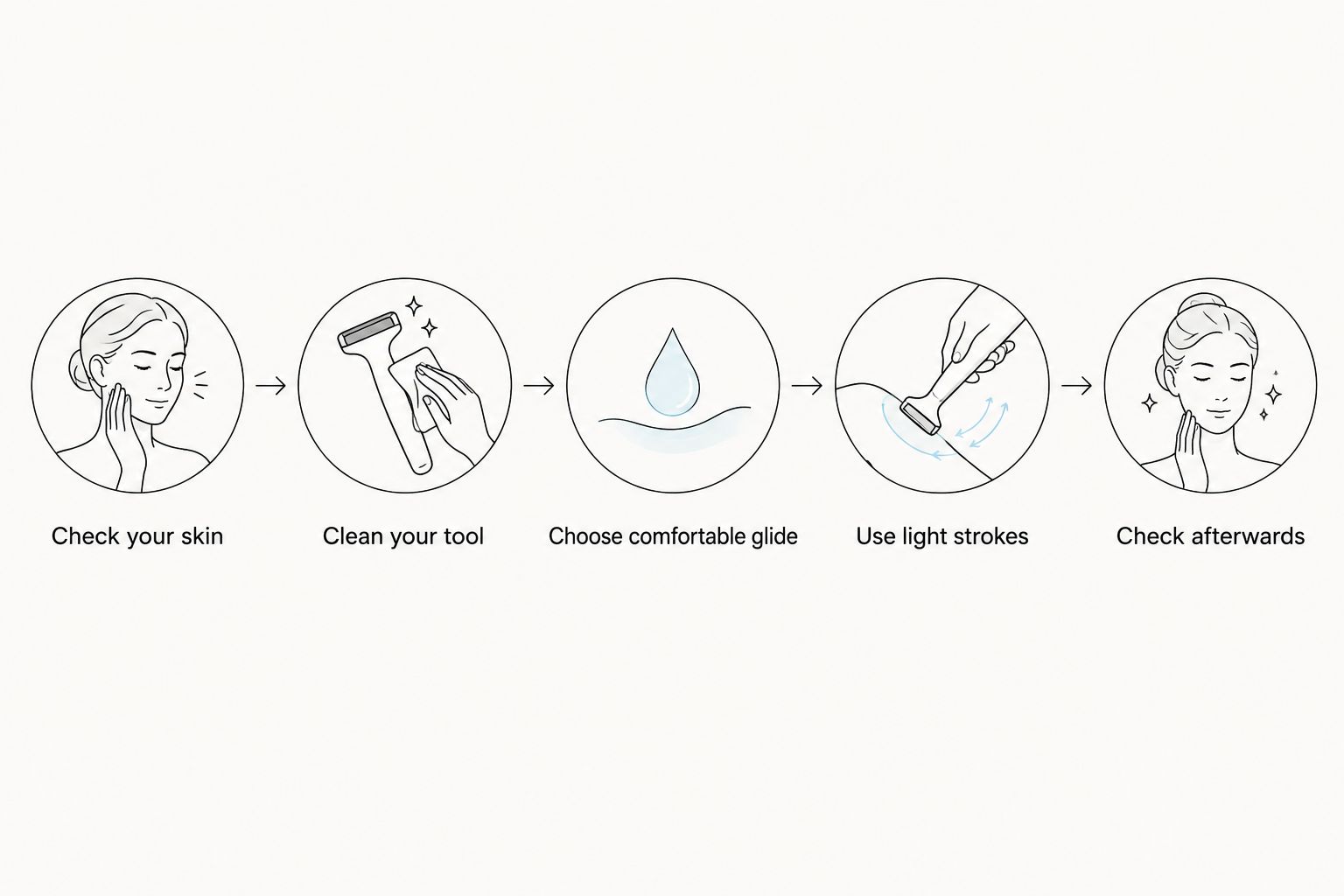
- Check your skin first. Look for cuts, sunburn, tenderness or active inflammation. Leave those areas alone rather than trying to massage around a problem that needs attention.
- Start with clean hands and a clean tool. Remove any residue left from earlier use and follow the tool's care instructions. A tool that looks clean can still carry leftover skincare or makeup.
- Choose comfortable glide. The tool should move across your skin without tugging. A skincare product can provide slip, but choose one your skin already tolerates rather than introducing several new products at once.
- Use light, controlled strokes. Let the tool follow the surface of your skin. Pressing harder is not a shortcut to a better result.
- Check your skin afterwards. If it feels sore, looks bruised or stays irritated, stop and give it a break. If a reaction concerns you or persists, speak with a qualified healthcare professional.
Those steps matter more than completing a daily streak. In 2026, the sensible answer to “how often?” is still guided by your skin's response and the instructions for your exact product, not by a universal schedule.
Where should the tool move?
Keep facial strokes controlled and avoid dragging the skin. Work only on areas that feel comfortable, and be especially careful around delicate or irritated spots. If you are unsure how your particular tool is meant to contact the face or neck, use its own instructions rather than copying a technique designed for a different shape.
Do not assume that more redness means more benefit. A flushed appearance after friction tells you that the skin has been worked; it does not establish that a stronger stroke is helpful. If your goal is a stress-free beauty experience, comfortable skin is a better stopping point than a visible mark.
What if the tool does not glide?
Stop the stroke instead of forcing it. Reconsider the pressure, the angle of the tool and whether your skin has enough slip. A product used for glide should suit your skin on its own; gua sha does not make an irritating formula gentler.
This is also why adding a new active skincare product and starting daily massage together makes reactions harder to understand. Introduce changes separately so you can tell which step your skin dislikes. You can keep the rest of your K-routine simple while you work that out.
Why daily gua sha tolerance varies
There is no single rule that makes daily massage comfortable for every face. These factors change the decision:
- Your skin's current condition. Broken, sunburnt or inflamed skin needs you to skip massage on the affected area.
- Pressure. A firm stroke creates more friction than a light one. Pain or bruising is a reason to stop.
- Glide. A tool that drags can pull at the skin. Adjust the routine rather than repeating the same stroke.
- Other steps in your K-routine. If your skin is already irritated by a skincare product, adding massage can make it harder to identify and settle the problem.
- Tool hygiene. Clean the tool as its instructions direct, particularly when skincare and makeup residue collect on its surface.
- The exact product you own. A manual massage tool, a skincare cream and an electronic beauty device are not interchangeable. Read the directions for each one.
For 2026, the practical rule is straightforward: your skin's response decides whether to continue, pause or leave gua sha out. A routine is only useful when it fits the skin you have now.
Is a Medicube gua sha cream the same as a gua sha tool?
No. A cream and a massage tool are different kinds of products, even when their names share “gua sha”. AU Beauty Bazaar lists Medicube PDRN Collagen Gua Sha Neck Wrinkle Cream, but the product name alone does not establish that it includes a separate physical tool or that it should be used for facial massage every day.
If you are shopping for skincare to use during massage, read the current product details and directions before pairing anything with your tool. Consider where the product is intended to be applied and whether your skin tolerates it. Do not assume that a neck cream is intended for every part of the face or that its name supplies instructions for a tool.
Best for: someone checking a named Medicube skincare product against the tool they already own. Limit: a product listing cannot tell you whether daily facial massage is right for your skin. AU Beauty Bazaar can help you identify the product; your skin's response and the item's directions determine the routine.
Should you use gua sha with exfoliants or retinoids?
If your skin feels tender or irritated after an active skincare product, skip gua sha until it feels comfortable again. Physical friction is not a fix for a reaction. You do not have to abandon every active ingredient to use a massage tool, but you should not push through soreness just to keep both steps in the same routine.
Keep the decisions separate. First ask whether the skincare product suits your skin when used as directed. Then ask whether massage still feels comfortable. When both are new, changing one step at a time gives you a clearer answer than layering them together and guessing what caused the irritation.
A gua sha tool also does not make exfoliation more effective by pressing products into the skin. Treat each step according to its own instructions. In 2026, there is no good reason to turn a gentle routine into a test of how much friction your face will tolerate.
Can daily gua sha permanently sculpt your jawline?
No. Daily gua sha cannot permanently reshape your jawline. A temporary change in the appearance of puffiness is different from a structural change to your face, so judge the routine by comfort rather than expecting a lasting contour.
That answer helps set a reasonable goal. If you enjoy gentle massage and your skin stays comfortable, keep it as an optional self-care step. If the only reason you are using it is a promise of permanent sculpting, daily repetition will not turn that promise into a result.
What should you do if gua sha causes redness or bruising?
Stop using the tool if gua sha causes soreness, persistent irritation or bruising. Do not press harder, repeat the stroke or cover the reaction with another active product to finish the routine. Let your skin settle, and seek advice from a qualified healthcare professional if the reaction is significant or does not improve.
Some people mistake a strong visible reaction for evidence that the tool is doing more. It is a poor guide to technique. Your skin does not need to look worked over for a K-routine to be worthwhile, and bruising is not an outcome to aim for.
FAQ
Is it safe to use Medicube gua sha every day?
Yes, daily use can be safe if you use light pressure, keep the tool clean and your skin remains comfortable. Skip broken, inflamed or sunburnt skin, and follow the directions for your exact product.
Do I need to use gua sha every day to see a difference?
No, daily gua sha is optional. Facial massage can change the appearance of puffiness temporarily, but repeating it every day will not permanently reshape your face.
Should gua sha hurt or leave bruises?
No, pain and bruising are reasons to stop using the tool. Reduce pressure, check that it glides without pulling and seek professional advice if a reaction concerns you.
Can I use gua sha on acne or irritated skin?
Avoid massaging areas that are inflamed, broken or sore. If your skin is irritated, let it settle before deciding whether to resume gua sha.
Can I use a Medicube gua sha tool without skincare underneath?
The tool should glide without dragging your skin. Follow its instructions, and if a product helps provide slip, choose one your skin already tolerates.
Is Medicube gua sha neck wrinkle cream a massage tool?
Medicube PDRN Collagen Gua Sha Neck Wrinkle Cream is named as a cream, not a standalone tool. Check the current product details rather than assuming its name means a physical tool is included.
Will daily gua sha permanently sharpen my jawline?
No, daily gua sha does not permanently change your jawline. Any visible change associated with facial puffiness is temporary, so do not use stronger pressure to chase a lasting contour.
One last thing
The safest daily gua sha habit is knowing when to skip it. If your skin feels comfortable, a gentle massage can remain part of your 2026 K-routine; if it feels sore or looks irritated, taking the tool out of that routine is the clear next move. Check the directions for the item you own, rather than treating every Medicube product with “gua sha” in its name as the same thing.